Job Offer Analyzer: decoding a job ad in 10 seconds
A side project I designed and built alone: paste a job ad and get an AI analysis of it: the real seniority behind the title, the warning signs in the wording, and good questions to ask — then track every application, without an account.
Try it with a sample adResults
- 183 automated tests
- Every warning sign sourced back to the ad
- Works fully without an account
- Role
- Designer & developer · solo project
- Team
- Just me
- Duration
- Ongoing side project · 6 phases shipped so far
- Platform
- Web app
- Tools
- Next.js · IndexedDB · Vercel
The starting point
I kept reading job ads that said one thing and meant another: "senior" roles asking for two years of experience, "competitive salary" with no range, "fast-paced" as a euphemism for no boundaries. Spotting the pattern takes practice, and even then it's easy to miss a flag buried in the third paragraph.
So I built the tool I wanted for myself: paste a job ad, get a straight read on it in about ten seconds — then keep a record of why I did or didn't apply, instead of losing that reasoning a week later. The code is on GitHub.
How I worked
- 01
Design the verdict first
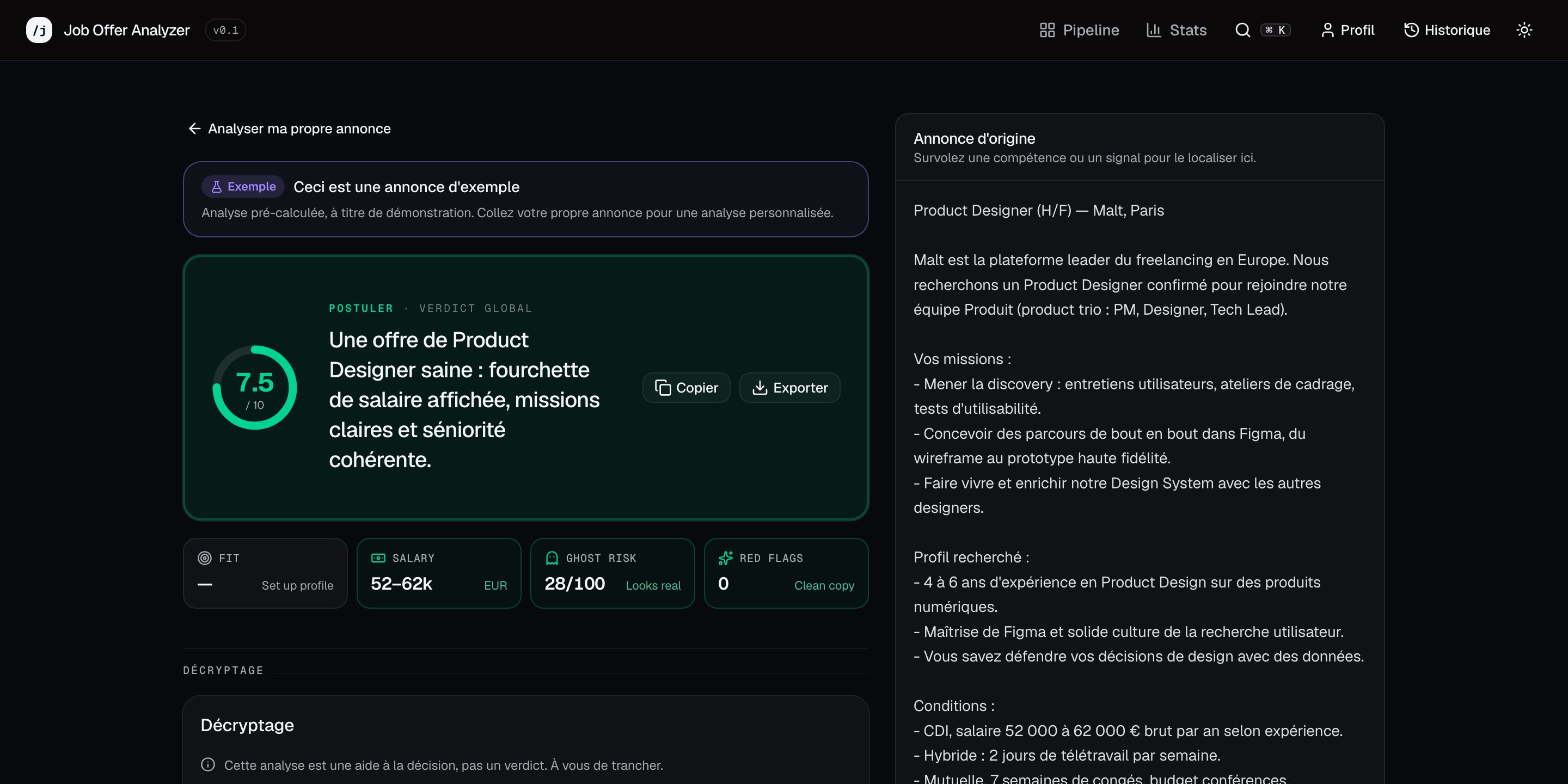
Before any screen, I decided what a useful answer actually looks like: a score, the real seniority versus the one in the title, and the questions worth asking in an interview. Every other feature serves that one answer.
- 02
Source every claim
A warning sign is only as useful as the sentence it comes from. Each one has to point back to the exact words in the ad — if the quote can't be matched in the text, it's flagged as unsourced instead of stated as fact.
- 03
Build, test, ship — alone
I designed, coded and tested it myself: 183 automated tests, French and English copy checked for parity at build time, and layouts tested down to 375px.
- 04
Be honest about privacy
No account, no tracking cookies, nothing imposed. The ad text passes through the server only long enough to get analyzed, and that's written in plain language on the page itself, not buried in a policy.
What it catches
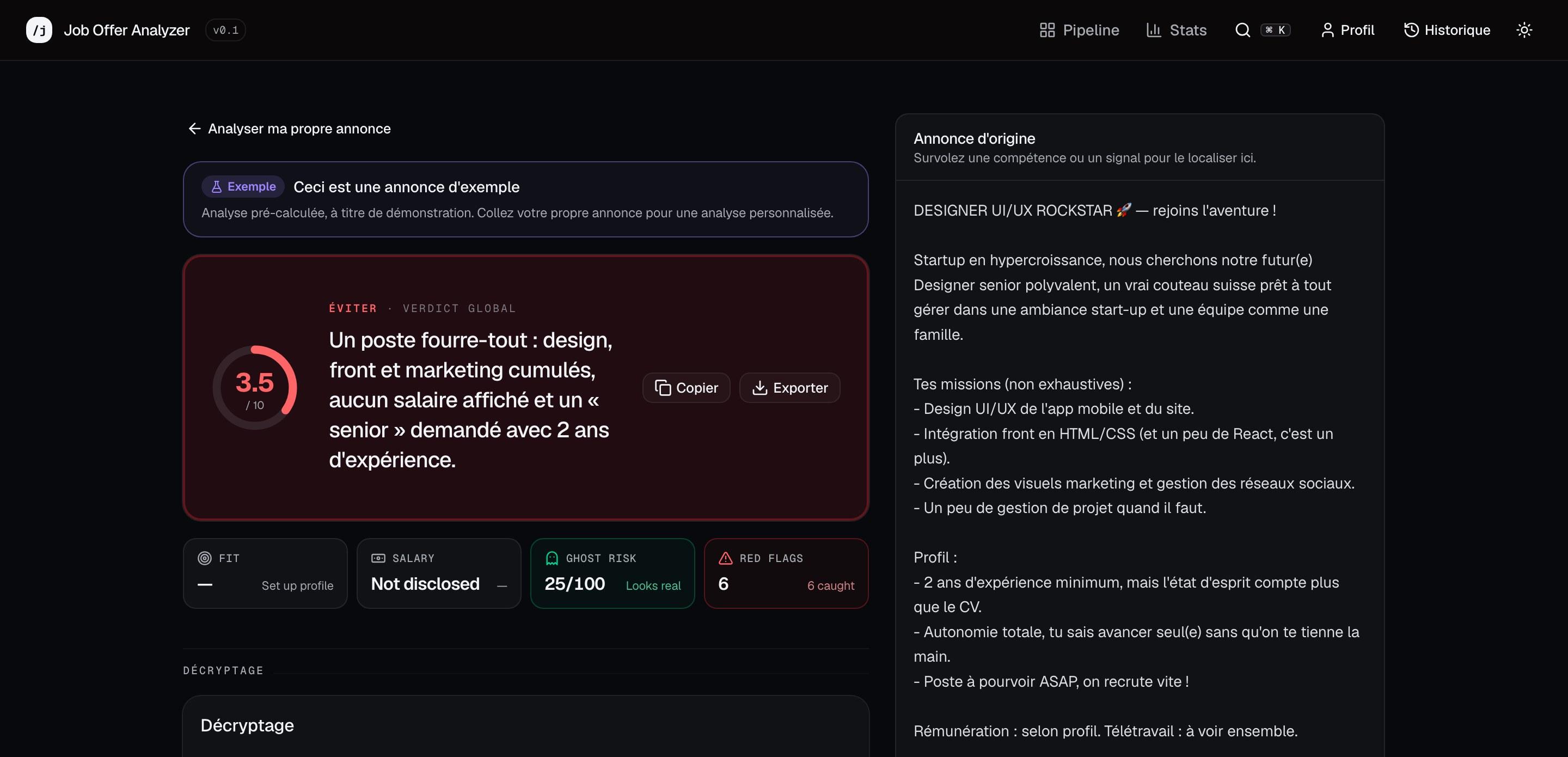
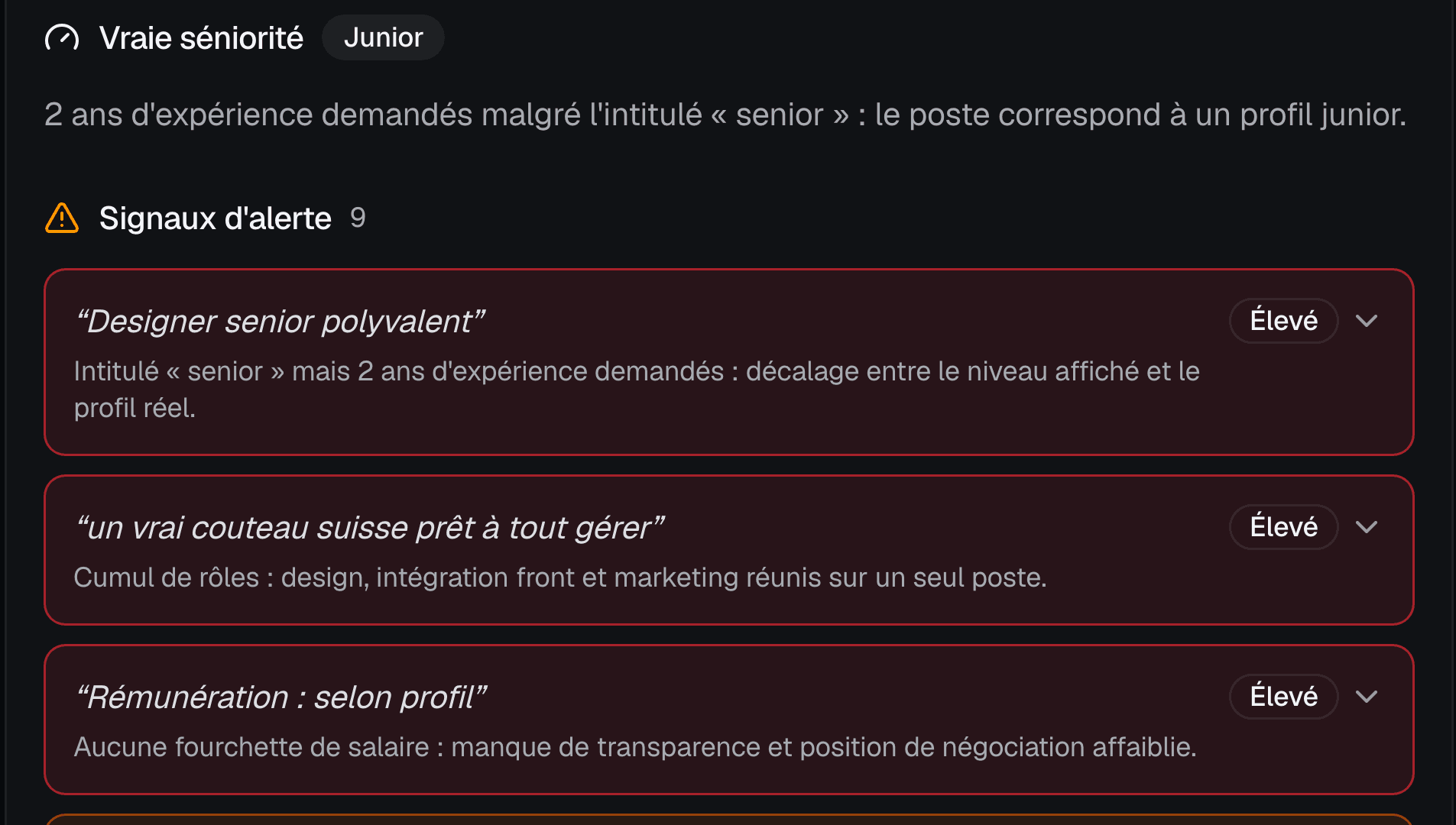
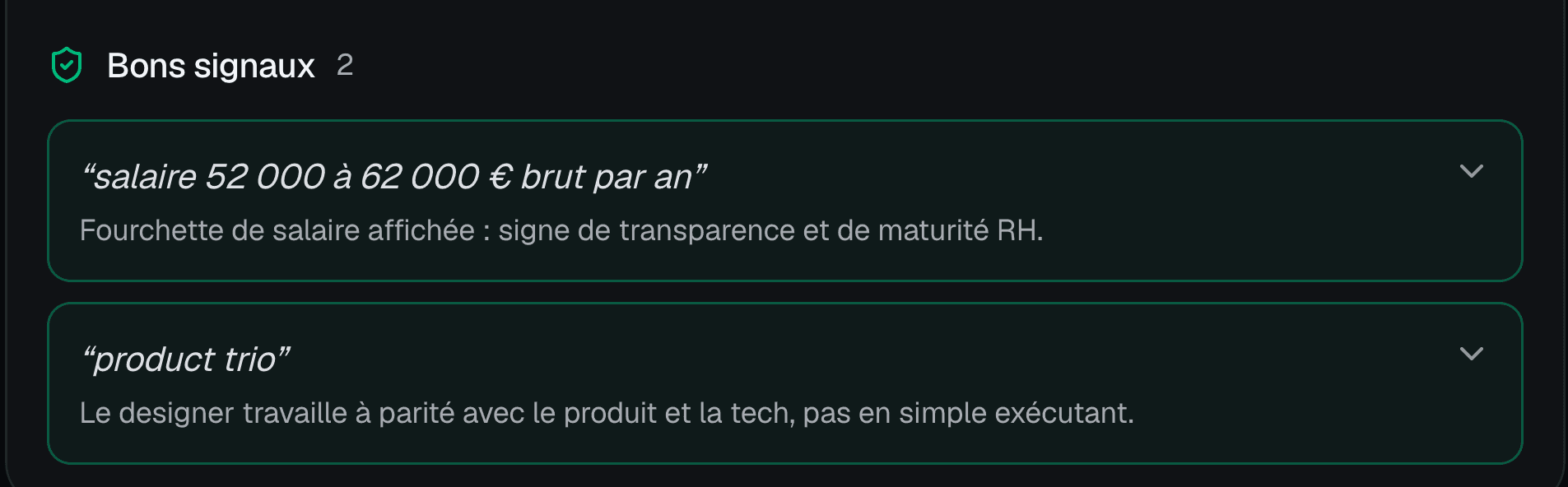
Every flag is contestable, on purpose. The tool shows its reasoning and the exact quote behind it, so people can disagree with a signal and adjust their own score — it's meant as a second opinion, not a verdict.
Designed in French first
The product speaks French first, not translated after the fact: French typography, the vocabulary a French job-seeker actually uses, and quote-matching that holds up against non-breaking spaces and curly apostrophes — the small things that break naive string matching in French. English is the second language, verified for parity, not the source.
Results
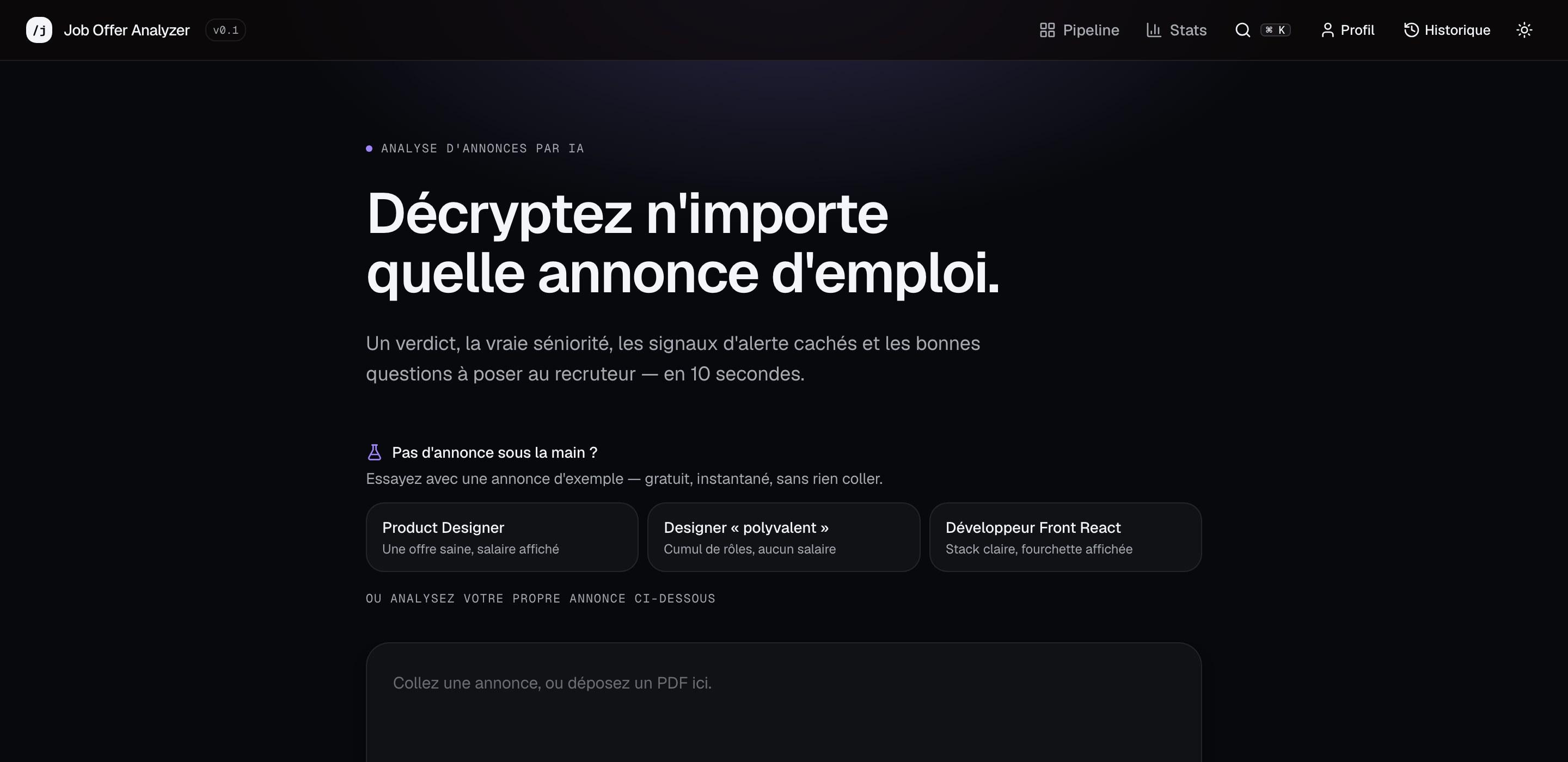
The three sample ads built into the tool need no API call, so anyone can try it instantly — including a recruiter clicking through from here.
What I'd do differently
I added application tracking early, because I was excited about it, before I'd pressure-tested whether the analyzer itself was good enough to show a stranger. Next time I'd hold the line on the core verdict — make that excellent and trusted first — before building anything past it.
"A tool that explains itself, and lets you argue back, earns more trust than one that just hands you a score.
"