Case study · PWA · 2026
BingeClub: tracking shows together, without spoiling the ending
Tracking shows and films together, without spoiling the ending.
- Format
- Installable PWA · iOS, Android, desktop
- Period
- April — September 2026
- Team
- Just me
- Role
- Designer & developer · solo project
- Stack
- React · TypeScript · Supabase · TMDB
- Screens
- Home, Binge, series page, search
- 2
- profiles, one colour each
- 1
- core gesture: tick off the episode
- 3
- show states: watching, caught up, on pause
- 0
- accounts to create
Where's the other one?
Series trackers are built for one person. When you watch together, this question comes up every evening.
Watching an episode without the other person spoils the evening. Waiting for nothing does too. I wanted an app where each person keeps their own list and progress, and where the gap between the two of you reads instantly.
One colour per person
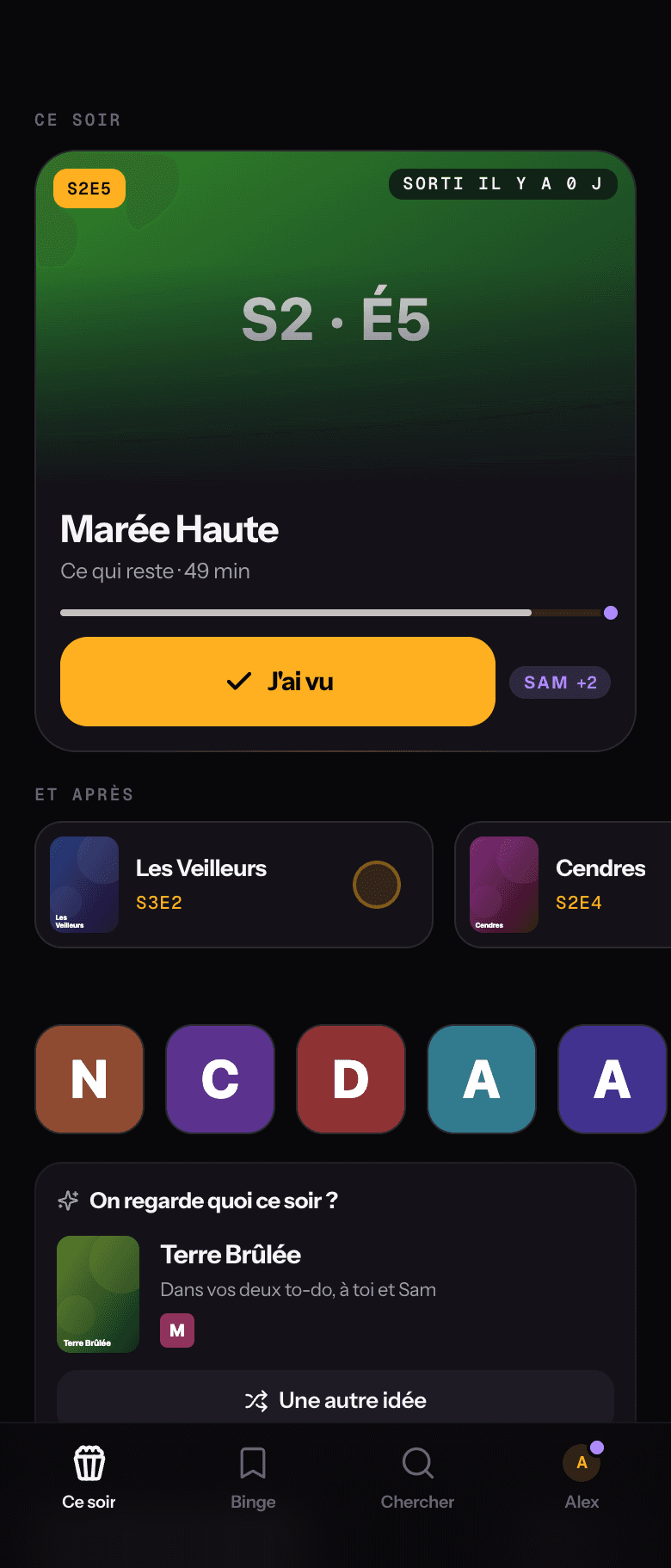
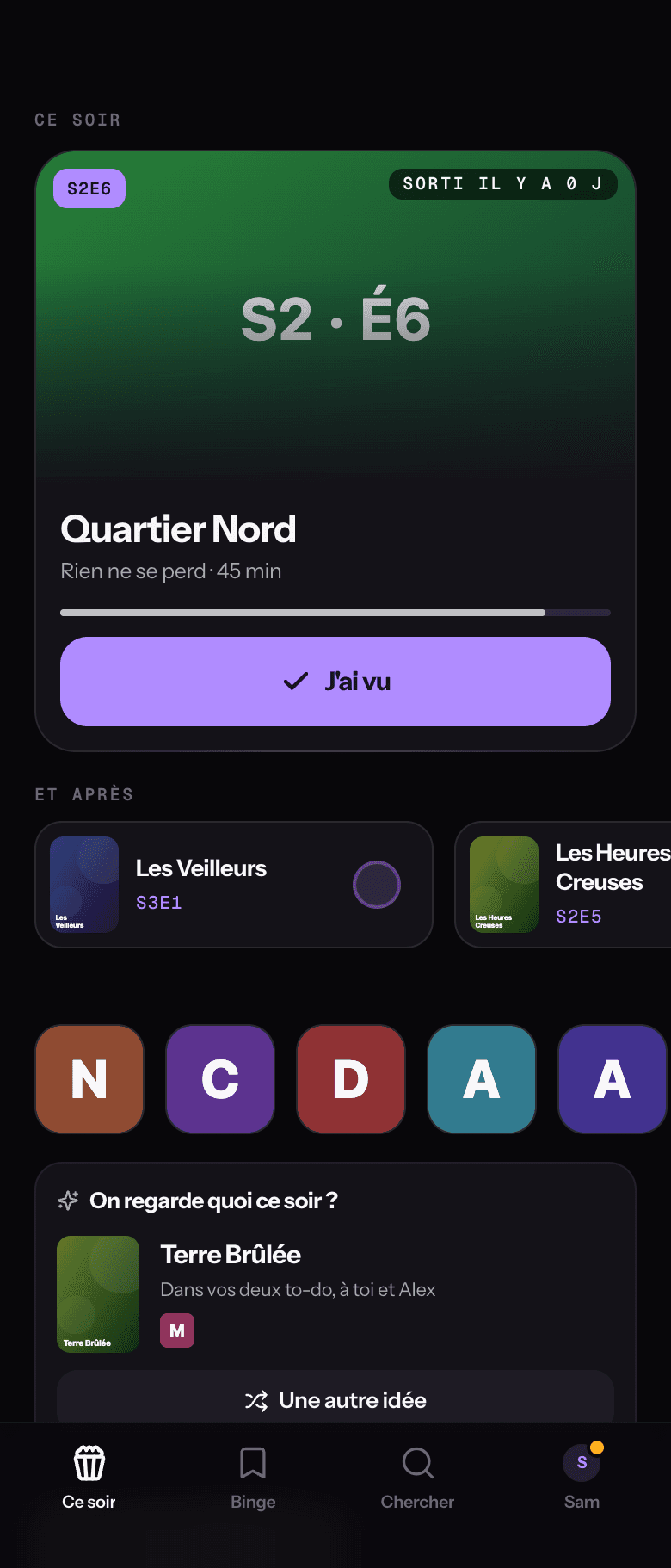
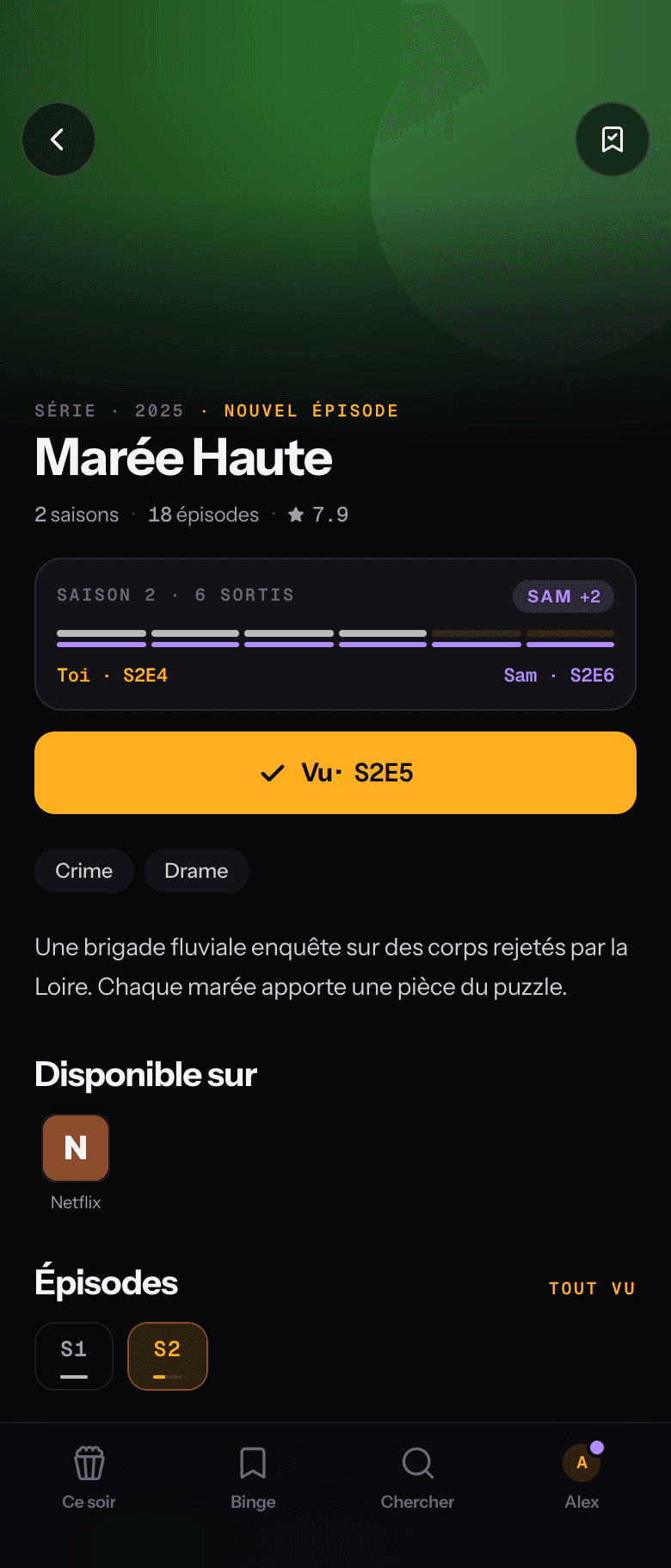
In the app, a colour belongs to a person, not to a role. Alex is amber, Sam is purple, on every screen and on both phones.
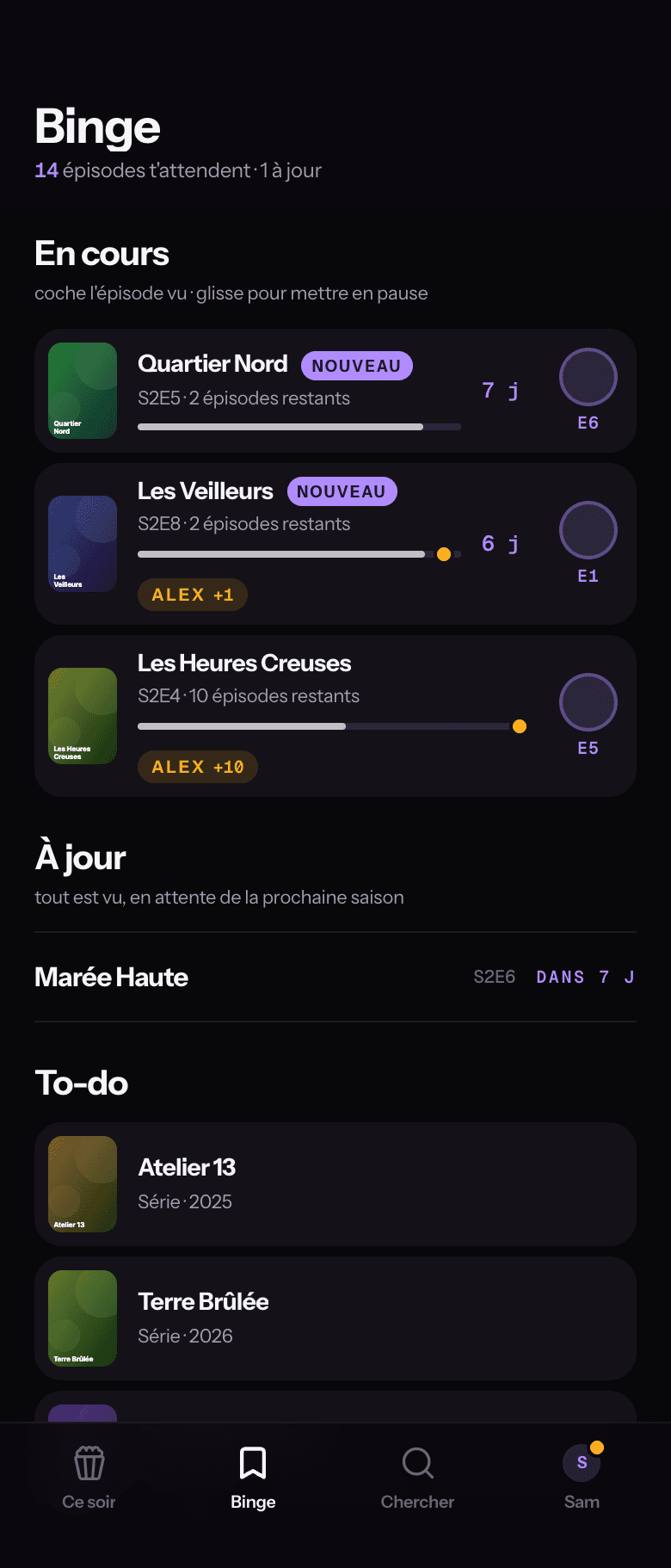
What changes with the active profile is where each colour sits. Your own colour marks what's waiting for you; the other person's shows where they are. The SAM +2 badge says in three characters that the other person is two episodes ahead. It only appears when they're ahead: on Sam's side it reads ALEX +1 on the show where Alex has pulled ahead, and nothing on the one where Sam is already caught up.
Every colour is checked against the dark background: at least 4.5:1 for text, and saturated enough to stay visible as a 2px line.
One gesture: tick it off
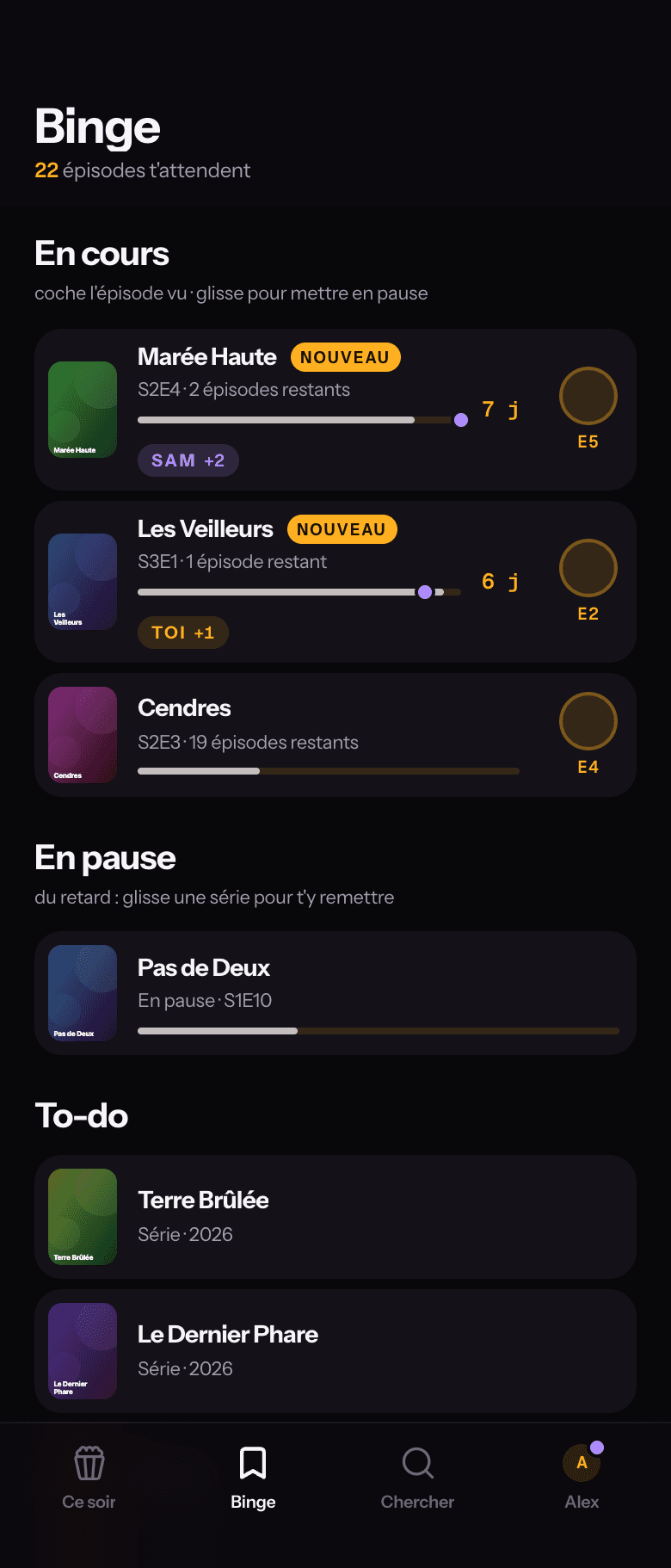
The core gesture is ticking off an episode you've watched. On the home screen, I've watched it moves tonight's show forward one step. On the Binge page, shows are sorted into three states: Watching, Caught up, On pause.
A show only counts as caught up if the latest released episode is ticked. An episode that came out yesterday and isn't watched yet puts the show back at the top, with a NEW badge. The counter says "14 episodes left" rather than "14 to watch".
The series page compares both people's progress episode by episode, and makes the next episode to watch the main button.
No accounts, on purpose
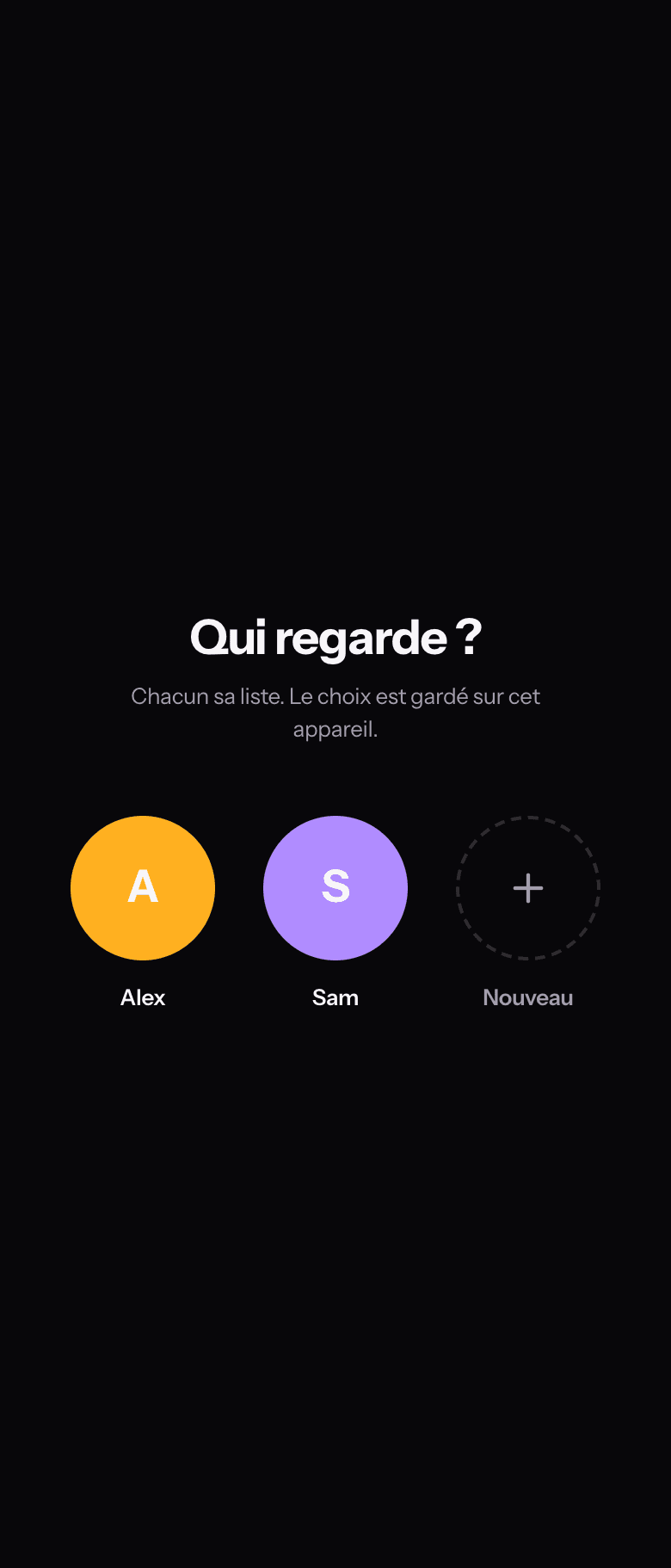
The app has no sign-in. On first launch, each person picks their profile, and the choice stays on the device.
That's a deliberate trade-off. For two people, an account adds friction and protects almost nothing. The cost is written plainly in the documentation: the database is open to anyone who knows the public key, and the app's address works as the secret.
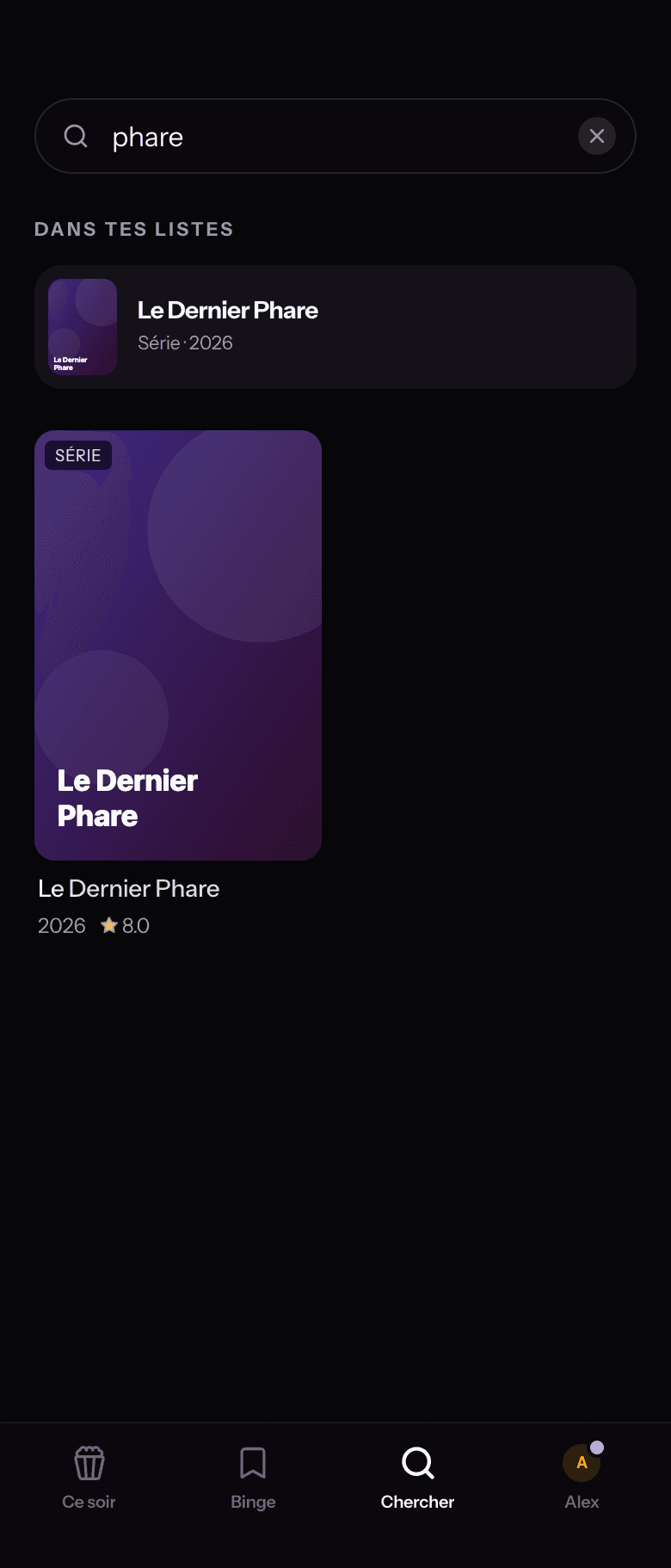
Search shows what's already in your lists first, so nobody adds the same title twice.
Under the hood
A lighter client
One realtime channel
Optimistic writes
Open on the last state
The expensive part on the server
Notifications that matter
The bugs that shaped the app
A PWA on an iPhone doesn't behave the way it does on paper. Three finds changed how I build the sheets.
The dvh unit doesn't exist
The toolbar hid the button
A deploy one launch behind
Five months, several directions
- 28 AprilFirst draft.Moved from Firebase to Supabase, dropped sign-in, neon look.
- 30 April – 4 MayApple Music, then a Netflix, Disney and Apple Music mix.A profile picker with round avatars, and several visual rewrites.
- 17 JulyA single-user tracker.The app first becomes a tracker for one person.
- 31 AugustInspired by TV Time.A light theme and an "Up next" screen, then back to the dark theme the same day.
- 1 SeptemberThe duo appears.To-do lists, the three-state Binge page, the spoiler gap, "What are we watching tonight?".
- 3 – 6 SeptemberiOS bug hunting and a performance audit.Queries, cache, bundle, PWA updates.
- 15 SeptemberTwo colours, two people, one gesture.The visual redesign that gave the app its current identity.
Limits, and what's next
- No sign-in. Security rests on keeping the address private. An access layer would be the first thing to add if the app ever left a circle of two.
- No automated tests or CI. A manual checklist covers profiles, lists and episodes.
- Built for two. With three profiles or more, the app compares against the first other profile, which doesn't make sense for everyone at once.
- One table is missing from the schema. The notification subscriptions table is used by the server functions but isn't in the schema file yet.
Showing a private app
The real app runs on a shared space I couldn't expose. To present it, a demo mode swaps the database and the film service for fictional data: fourteen invented series and twelve films, posters drawn on the fly, and two profiles with different progress.
Dates are calculated relative to today, so there's always an episode released yesterday and another announced for next week, which keeps the badges and gaps alive. All of that code sits in one folder and only switches on with an environment variable.